
Autonomous Mobile Robots
Your pallets move themselves. No driver, no shift to cover, and no change to the building you already have.
What actually changes on your floor
Three things, and none of them are about the robot.
-
The roles you cannot fill
The moves still happen at two in the morning and on a Sunday, whether or not anyone applied for the job.
-
The hours nobody wants
Night runs, weekend runs, and the ones that keep somebody in the freezer for half a shift.
-
The job that was hurting someone
Repetitive lifting comes off your people and onto a machine that does not mind doing it all day.
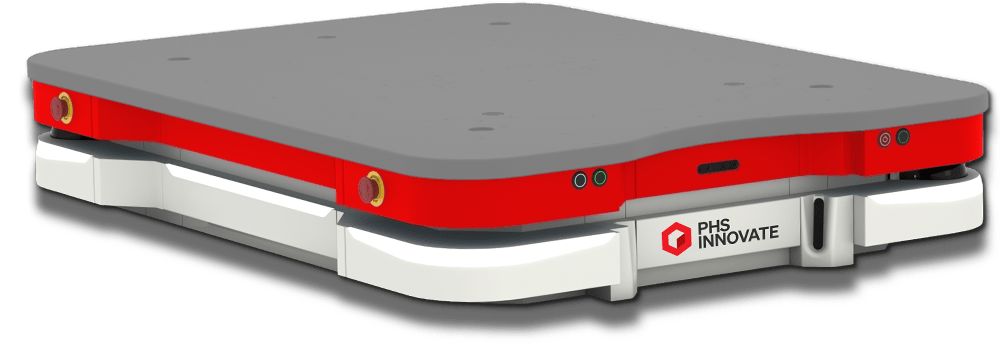
The pallets move without anyone moving them
Every pallet that crosses your floor right now has a person attached to it. A driver, a walk, a shift that has to be covered whether the work is there or not. That is the cost this takes out.
The machine collects the pallet, takes it where it has to go and sets it down, on its own, for as many hours as you run. Nobody is rostered to push it and nobody is waiting on a forklift to come free.
It reads the space and plans its own route, so there is nothing to cut into your floor and nothing to lay down. When the work changes you add a machine or change a run in software.
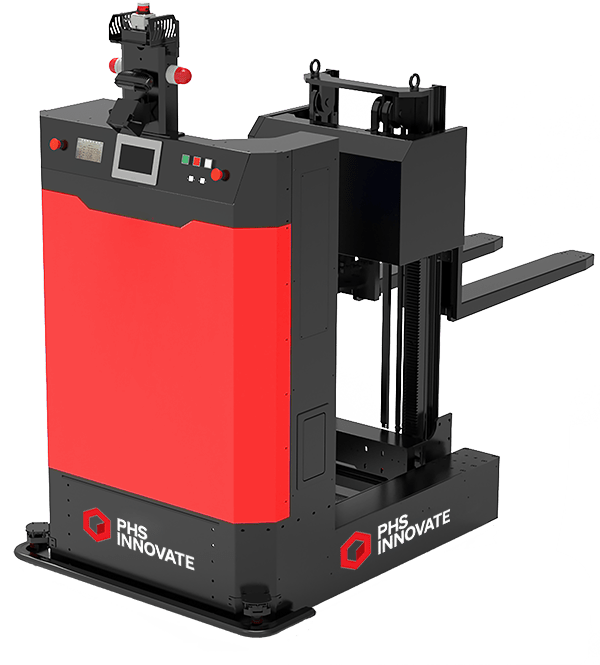
It can put the pallet away, not just carry it
Most driverless machines take a load from A to B and hand it to something else. A conveyor, a docking station, or a driver who was going to do that part anyway.
The machines we put in lift as well, so the pallet goes from the floor straight into the racking and back out again with nobody in between. That takes a whole step out of the job, and usually a whole piece of equipment out of the quote.
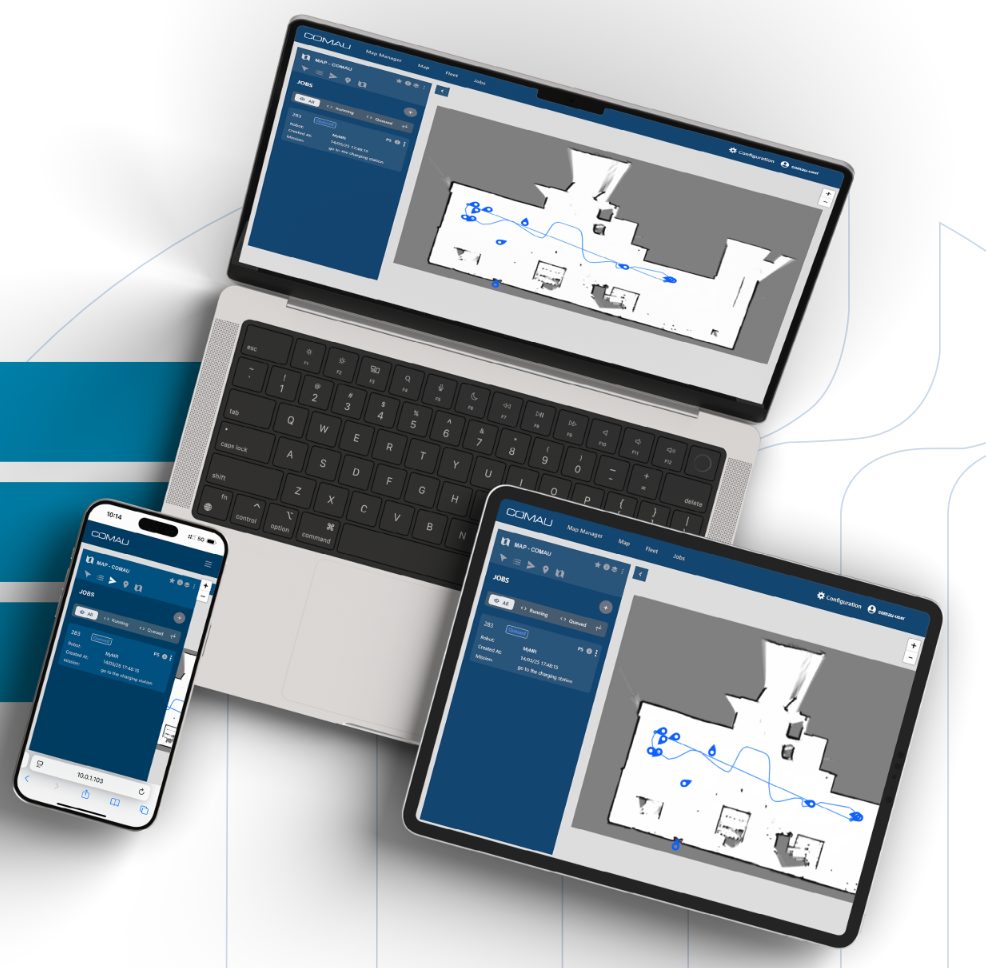
Run the whole fleet from one screen
The fleet runs from one system. Work goes to whichever machine is closest, least busy and best charged. Batteries are watched and topped up before anything stops mid-run. And you get a live view of what the fleet actually did, rather than what you hoped it would.
It runs in a browser, so a supervisor can see the floor from a phone on the dock. When the work grows you add machines to the same system instead of learning a second one.
The two platforms we compare most often
One lifts a pallet into racking. The other slides under it and carries it. The height difference in the table tells you most of what you need to know.
| Globl PTR-H-GDS | COMAU MyMR-1500 | |
|---|---|---|
| What it is | Driverless forklift. Puts pallets into racking and takes them out. | Driverless deck platform. Carries a pallet across the floor. |
| Carries up to | 1,000 kg | 1,500 kg |
| Lifting | Forks, 80 to 1,850 mm | Lift, roller or chain conveyor deck attachments, at deck height |
| Machine size | 1,530 × 1,235 mm, 2,130 mm high | 1,415 × 1,078 mm, 302 mm high |
| Machine weight | 1,500 kg | 265 kg |
| Navigation | Laser SLAM | Natural navigation, no fixed infrastructure |
| Positioning | ±10 mm, ±0.5° | ±10 mm, ±1° |
| Top speed | 1 m/s loaded, 1.5 m/s empty | 1.5 m/s |
| Run time per charge | 6 to 8 h | About 14 h |
| Charge time | 2 to 3 h | About 2 h to 80% |
| Battery | Lithium iron phosphate, 2.8 kWh or more, rated 2,000 cycles | Lithium ion |
| Sensing and safety | 3D obstacle camera, 3D pallet recognition, obstacle radars, collision bars on three sides | Lidar obstacle detection, safety-rated brakes, emergency stops, LED status indicators |
| Aisle to stack at right angles | About 2,200 mm | Not applicable |
| True of both | ||
| Charging | Automatic. The machine takes itself to charge before it runs out, and the fleet software decides when. | |
| Control | Central system issues the work, with a manual mode for setting up and recovery. | |
| Floor preparation | None. No wire, tape or trench. | |
We also supply the Flexley range: Flexley Tug for towing trains of stock, Flexley Mover for pick up and carry, and Flexley Stack for stacking alongside other automation.
We integrate them ourselves
Buying a robot is the easy part. Making it work with your racking, your conveyors and your warehouse system is the job, and we do that engineering in house. We were the first ABB Robotics Authorised Value Provider in New Zealand, and we have been solving materials handling problems here since 1955.
Tell us what you are trying to move
What it is, how much of it, how fast, and what the site looks like now. We will come back with what fits, and an honest view of whether automation is the right answer yet.